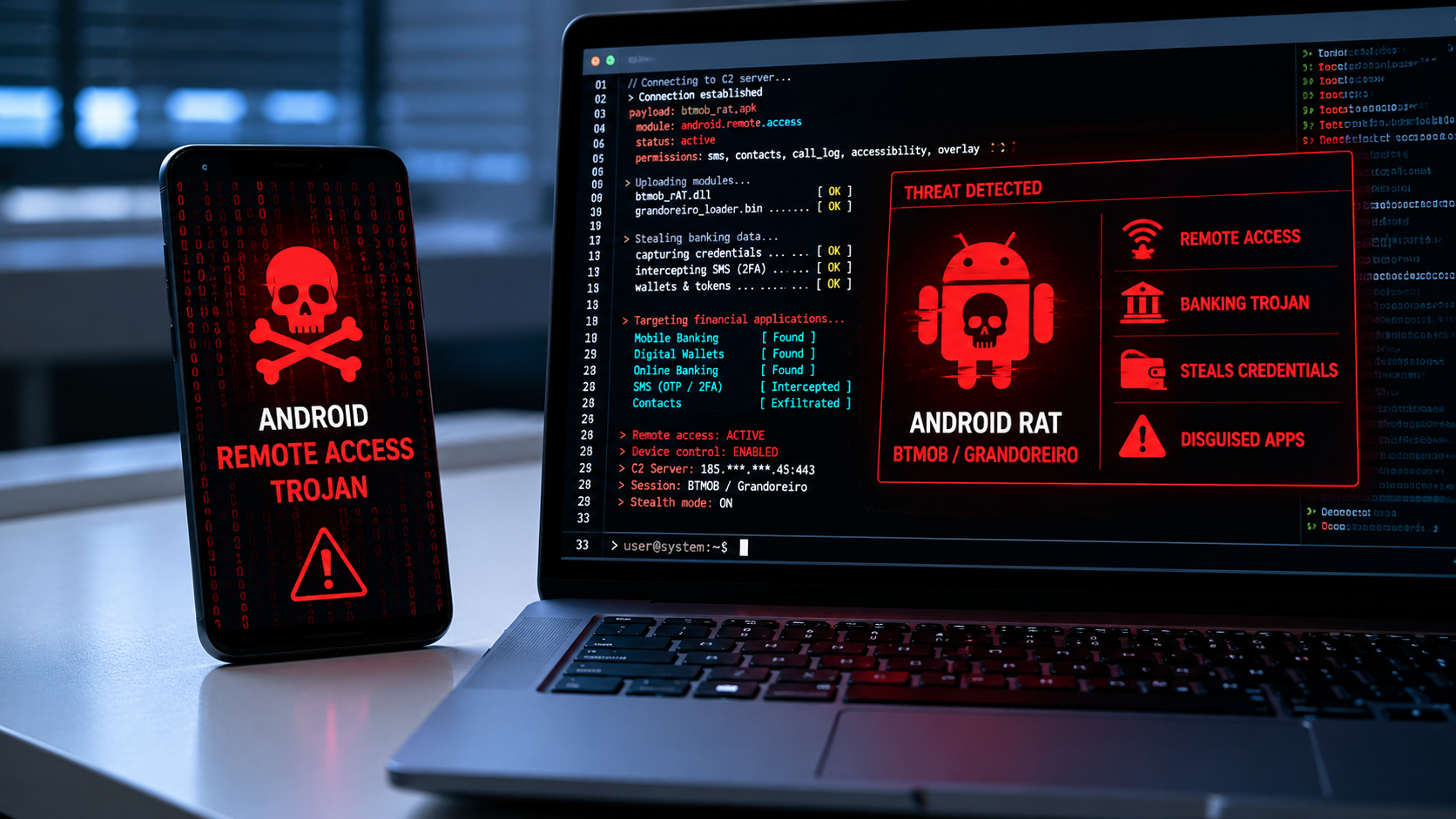
Security researchers are warning about the continued expansion of sophisticated Android malware operations after new investigations revealed additional details about the BTMOB Android remote access trojan and renewed Grandoreiro banking malware campaigns targeting users across Europe and Latin America.
Recent analyses published by multiple cybersecurity firms describe increasingly organized malware ecosystems built around phishing, remote device control, credential theft, and financial fraud.
Researchers Analyze Leaked BTMOB RAT Infrastructure
Researchers at D3Lab reported obtaining access to a leaked archive allegedly containing large portions of the BTMOB Android RAT ecosystem, including builder tools, Windows operator panels, command infrastructure, and Android source projects.
According to the researchers, the leak suggests BTMOB operates more like a centralized malware-as-a-service platform than a standalone malware kit distributed to independent operators.
The analysis claims the ecosystem includes:
- Android payload projects
- Dropper applications
- Remote administration panels
- WebSocket-based command infrastructure
- Operator authentication systems
- Builder and deployment utilities
Researchers said the platform appears to rely heavily on Android's Accessibility Services to automate device interaction, capture credentials, manipulate screens, and perform remote actions on infected devices.
"BTMOB operates as a centralized criminal platform."
The D3Lab report also claims operators authenticate through centralized infrastructure controlled by the malware developers themselves, potentially giving the threat actors visibility into operations conducted by customers using the platform.
Financial Theft and Wallet Targeting
Mobile security researchers at Zimperium previously warned that newer BTMOB variants expanded beyond traditional banking overlays and began targeting digital wallet applications including Alipay.
According to the report, some malware variants attempt to capture PIN input and wallet credentials through fake overlays and screen manipulation techniques.
Researchers say modern Android RAT operations increasingly combine:
- Remote device control
- Credential harvesting
- Screen streaming
- SMS interception
- Wallet theft attempts
- Banking overlays
Security analysts note that many of these capabilities resemble features traditionally associated with advanced banking malware rather than ordinary spyware campaigns.
Grandoreiro Banking Trojan Campaigns Continue
Separate research from Forcepoint and WatchGuard describes continuing Grandoreiro malware campaigns targeting banking users in countries including Mexico, Argentina, Spain, and other regions in Europe and Latin America.
Researchers say the campaigns commonly begin with phishing emails impersonating government agencies or financial institutions in order to trick victims into downloading malicious archives.
Forcepoint researchers reported that attackers used hosting providers, dynamic subdomains, ZIP archives, obfuscated scripts, and Delphi-based malware payloads to distribute the banking trojan.
"Cybercriminals are reviving the Grandoreiro banking trojan."
WatchGuard researchers similarly warned that Grandoreiro campaigns continue evolving despite previous law-enforcement disruptions aimed at dismantling parts of the malware infrastructure.
Security researchers say the malware has historically focused on banking credential theft, financial fraud, and remote interaction with infected systems.
Why Android Malware Is Becoming More Dangerous
Modern Android malware campaigns increasingly resemble commercial software platforms with customer support systems, subscription-style infrastructure, builder utilities, and centralized command panels.
Researchers say this model lowers the technical barrier for criminals seeking to launch phishing and financial theft campaigns.
Some malware families now incorporate:
- Real-time remote control
- WebSocket communications
- Automated overlays
- Live screen streaming
- Credential injection systems
- Dynamic phishing infrastructure
Security researchers also note that unofficial Android app downloads, sideloaded APKs, fake software updates, and phishing links remain some of the most common infection methods.
No Evidence Of Android Zero-Day Exploits
Current public research surrounding BTMOB and Grandoreiro largely points toward social engineering and permission abuse rather than Android zero-day exploitation.
In many documented cases, users are tricked into manually installing malicious applications and granting permissions that ultimately give attackers broad control over devices.
Security experts say this reflects a broader trend where threat actors increasingly rely on convincing phishing flows instead of expensive operating system exploits.
Why The Story Matters
The continued evolution of Android RAT ecosystems highlights how mobile malware is becoming increasingly industrialized.
Rather than isolated malware samples, researchers are now observing full criminal ecosystems with infrastructure, operator dashboards, phishing frameworks, and support systems resembling commercial software services.
Researchers warn that the combination of social engineering, Accessibility abuse, remote-control capabilities, and financial credential theft creates significant risks for users who install applications from untrusted sources.
Sources
- D3Lab BTMOB analysis: Here
- Zimperium analysis: Here
- Forcepoint Grandoreiro research: Here
- WatchGuard analysis: Here
This article was written by DigitalEscapeTools based on publicly available malware research, threat intelligence reporting, and cybersecurity analysis available at the time of publication.