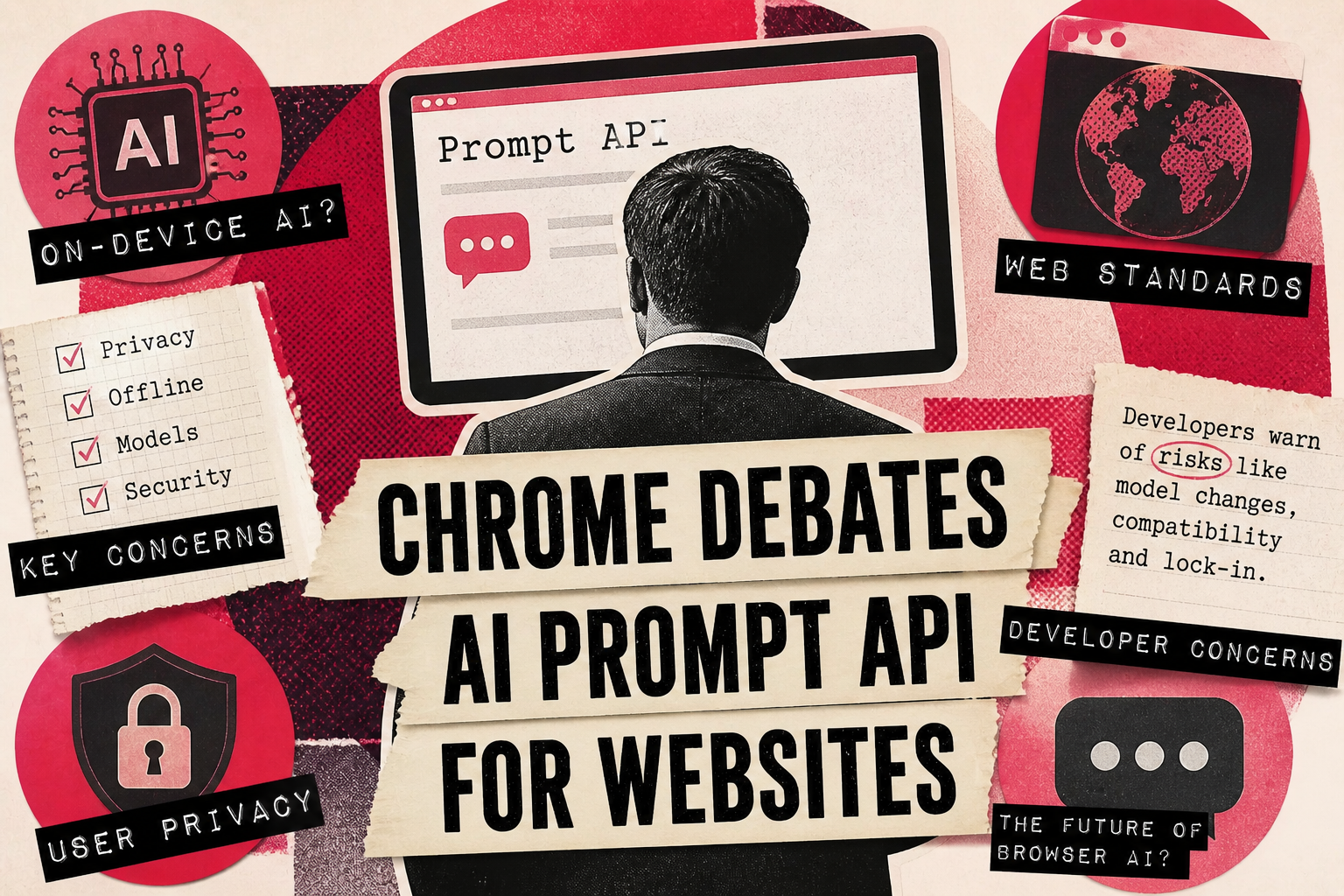
Chromium developers are debating whether Chrome should publicly ship a new web feature called the Prompt API, an experimental browser API designed to let websites access built-in AI models directly from the browser itself.
The discussion appeared on Chromium’s Blink developer mailing list as part of an “Intent to Ship” proposal for Chrome 148.
If implemented, the Prompt API could become one of the biggest changes to the modern web platform since browsers would begin exposing native AI capabilities directly to websites through JavaScript.
What Is the Prompt API?
The proposed API would allow websites and web apps to interact with AI models built into the browser or operating system.
Instead of sending prompts to external cloud APIs like OpenAI or Google servers, compatible browsers could process AI tasks locally on the user’s device.
Potential use cases include:
- Offline AI chat assistants
- Local text summarization
- AI writing helpers
- Image and multimodal analysis
- On-device AI search tools
- Privacy-focused AI applications
Supporters see the API as part of a broader transition toward browser-native AI and local inference instead of cloud-only AI systems.
Why Chromium Engineers Are Concerned
While several Chromium reviewers approved the proposal, some browser engineers raised major concerns shortly before the planned release.
Chromium engineer Alex Russell warned that the current API design may not properly handle:
- AI model version changes
- Differences between browser AI models
- Multimodal compatibility
- Cross-browser interoperability
- Future web standard stability
One major concern is that websites could become dependent on specific AI model behavior.
If Chrome updates its internal AI model later, websites relying on that behavior could suddenly break or behave unpredictably.
Critics also worry that different browsers may implement the API using completely different AI models, creating compatibility problems across the web.
Chrome AI Could Influence Future Web Standards
The debate highlights a growing concern inside the web standards community: browser vendors are increasingly becoming AI platform providers.
Historically, browsers exposed rendering and networking features. The Prompt API would move browsers much deeper into AI infrastructure.
Some developers fear this could eventually give large browser vendors significant influence over how AI behaves across the web itself.
Privacy Benefits and Risks
From a privacy perspective, local AI processing could reduce the need to send sensitive prompts and personal data to remote cloud servers.
On-device AI may eventually allow:
- Offline AI assistants
- Reduced cloud tracking
- Less dependency on external AI APIs
- Faster local processing
- More private browser-based AI tools
However, privacy advocates are also watching carefully because browser AI systems could introduce new forms of fingerprinting, telemetry, or platform lock-in depending on how vendors implement them.
Microsoft Edge Testing Adds More Questions
The discussion also referenced experiments from Microsoft Edge using alternative AI models instead of Google’s Gemini-based systems.
This raised additional concerns that AI behavior could vary significantly between browsers, potentially creating a fragmented AI web ecosystem.
Engineers are now debating whether the API should remain experimental for longer before becoming part of the public web platform.
The Bigger Picture
The Prompt API debate is not just about a single browser feature.
It reflects a larger shift happening across the technology industry: browsers are evolving into AI operating environments.
The outcome could influence:
- How AI applications are built on the web
- Whether AI processing stays local or cloud-based
- Future browser competition
- Privacy standards for browser-native AI
- How much control large vendors have over AI web infrastructure
For privacy-focused users and open web advocates, this may become one of the most important browser standard discussions of the AI era.
Sources
- Chromium Blink Dev Discussion — Intent to Ship: Prompt API
- Prompt API Specification Draft
- Prompt API Interoperability Discussion
- Prompt API Design Feedback Discussion
This article was written by DigitalEscapeTools based on Chromium Blink developer discussions, public web standards proposals, and Prompt API specification documents.