DuckDuckGo says it is seeing a surge in installs and traffic after Google's latest AI-focused Search overhaul triggered backlash from users frustrated with increasingly automated search experiences.
The shift follows announcements made during Google's I/O developer conference, where the company introduced expanded AI Overviews and a more conversational AI Mode designed to answer questions directly inside Search results instead of primarily returning lists of links.
While Google says AI features are intended to simplify searching and help users complete tasks faster, critics argue the changes are making Search feel less predictable and more difficult to control.
"Google just isn't Google anymore."
The criticism appears to be benefiting privacy-focused competitors such as DuckDuckGo, which has increasingly marketed itself as an alternative for users seeking more traditional search experiences and stronger privacy protections.
DuckDuckGo Reports Increased User Growth
DuckDuckGo said U.S. app installs increased by more than 18% week-over-week during the days following Google's Search announcements.
According to the company, iOS growth was even higher, with some days reportedly approaching nearly 70% week-over-week increases.
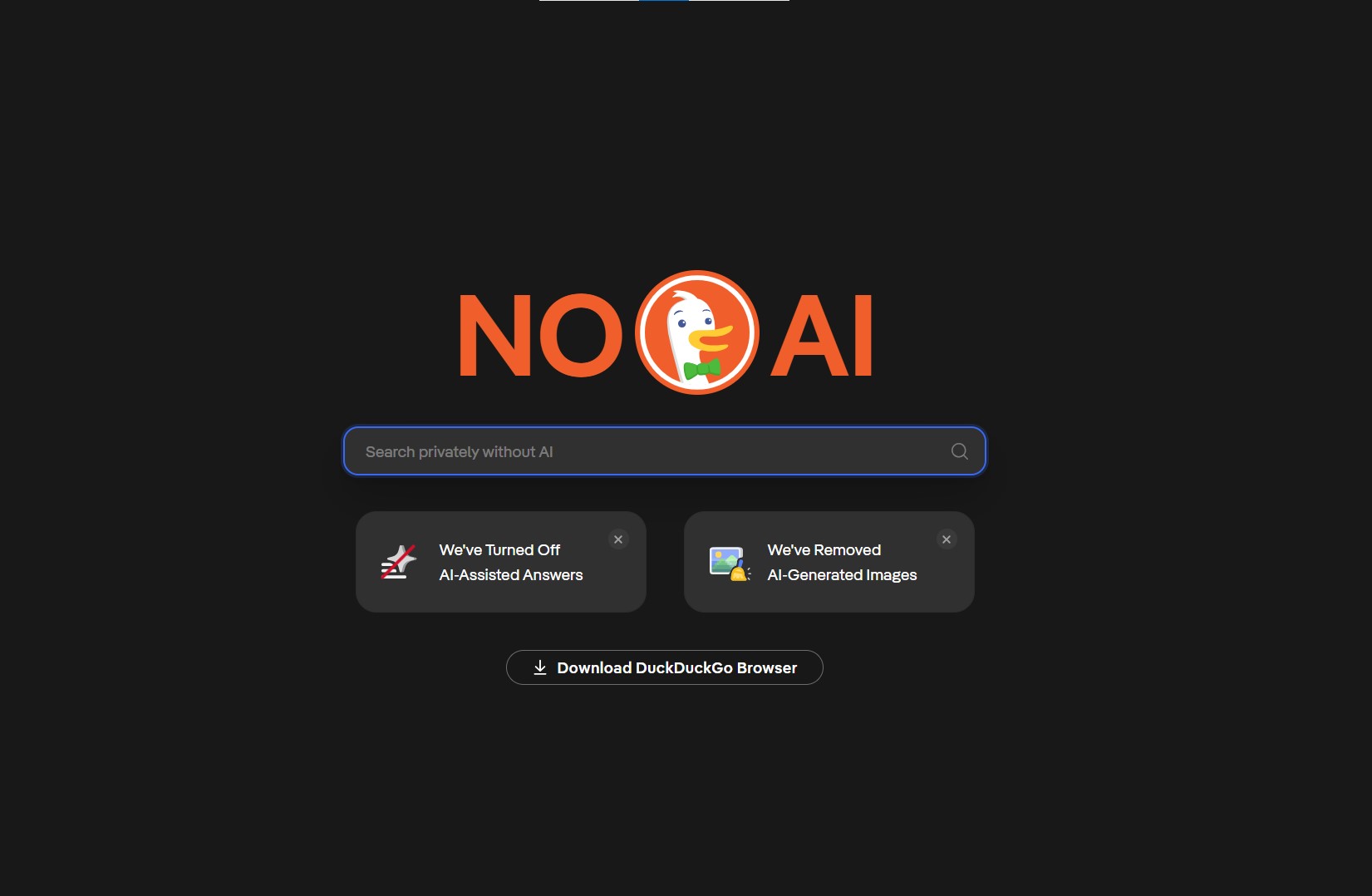
The company also reported rising traffic to its AI-free search page, noai.duckduckgo.com , which disables AI-assisted answers and AI-generated image features by default.
DuckDuckGo said the trend was strongest in the United States and continued through Memorial Day weekend, a period where search traffic would normally decline.
Some of the growth figures were backed by third-party analytics firm Apptopia, which reportedly observed increased download activity during the same period.
Google Pushes Further Into AI Search
At I/O, Google unveiled broader AI integration across Search, including AI Overviews capable of answering questions directly and a new AI Mode that allows conversational follow-up questions inside Search itself.
Rather than simply functioning as an index of websites, Search is gradually evolving into a conversational assistant capable of generating responses, summarizing information, and predicting user intent.
Google says AI-powered search usage continues growing rapidly and recently stated that AI-related Search interactions have more than doubled since launch.
However, critics argue AI-generated responses could reduce traffic to independent publishers by answering questions directly without requiring users to visit source websites.
"We want to be the place that puts users in charge."
DuckDuckGo CEO Gabriel Weinberg criticized Google's direction, arguing that users should have greater control over how much AI they interact with while browsing the web.
Weinberg also claimed Google's Search changes were making results "worse, not better" for some users seeking simple and predictable search behavior.
DuckDuckGo Still Offers AI Features
Despite positioning itself as an AI-optional alternative, DuckDuckGo also provides its own AI tools through Duck.ai.
The service allows users to access AI models from companies including OpenAI, Anthropic, Meta, and Mistral without requiring account creation.
DuckDuckGo says it strips IP addresses before requests reach model providers, deletes chats after a limited retention period, and does not use conversations for AI training.
The company also offers AI-assisted search tools and image filtering features capable of hiding AI-generated images from search results.
Growing Debate Around AI And The Open Web
The backlash surrounding Google's AI-powered Search reflects broader concerns about how generative AI may reshape the web ecosystem.
Publishers, developers, and privacy advocates have increasingly warned that AI-generated summaries could weaken the traditional relationship between search engines and independent websites.
Others argue conversational AI systems may introduce inaccuracies, hallucinations, and misleading summaries into search experiences users have historically trusted for factual information.
Supporters of AI-powered search, however, argue conversational systems can dramatically improve complex research tasks and reduce the time required to find information online.
Sources
- Google Search overhaul coverage: TechCrunch
- DuckDuckGo growth reporting: TechCrunch
This article was written by DigitalEscapeTools based on publicly available company statements, analytics data, and reporting available at the time of publication.