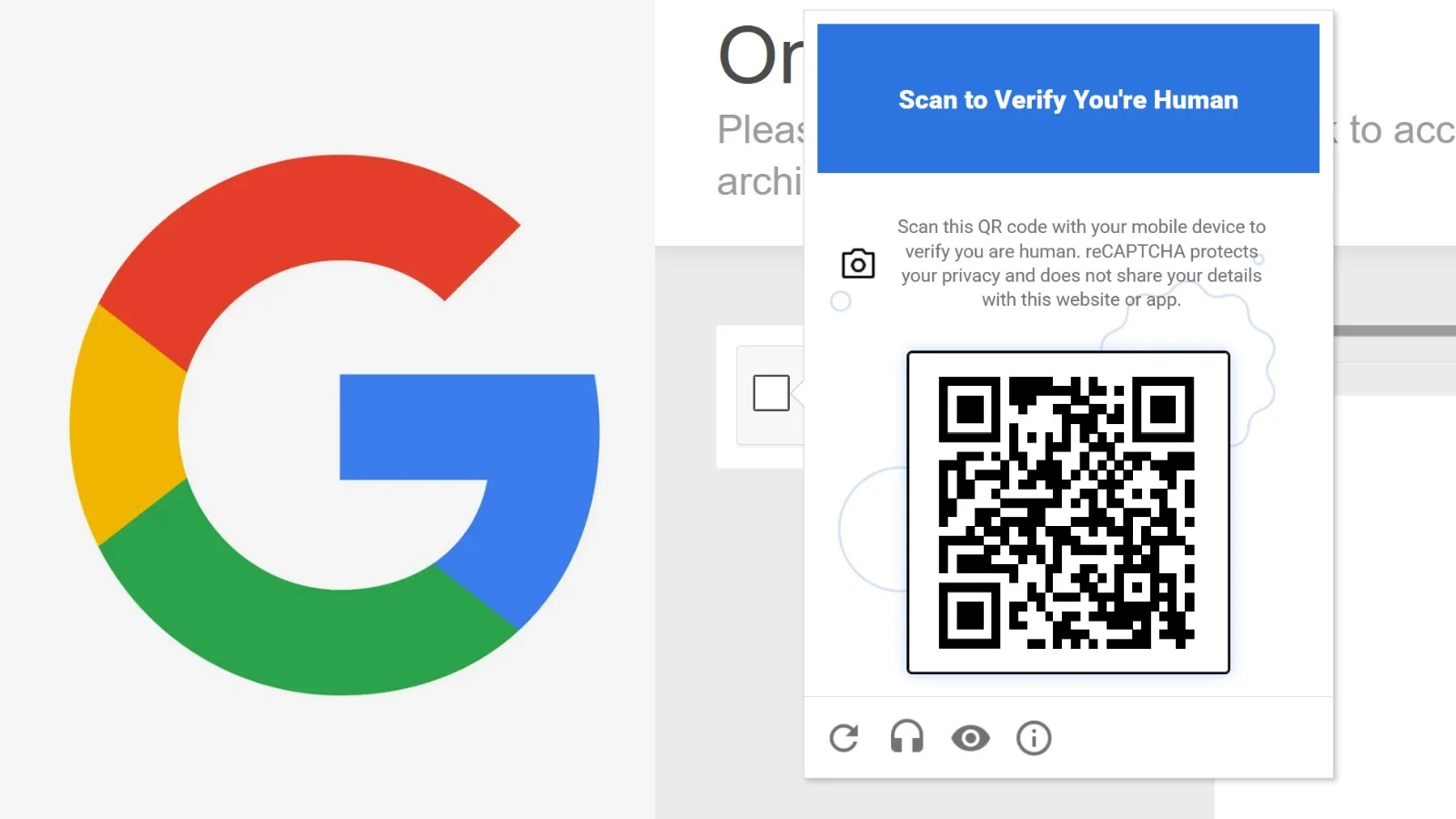
Google’s latest reCAPTCHA and anti-fraud verification changes are triggering concern across privacy and de-Googled Android communities.
The company recently introduced updated verification flows tied to Google Play Services and hardware-backed attestation systems as part of its expanding Cloud Fraud Defense platform.
While Google says the changes are necessary to combat increasingly sophisticated AI bots and online fraud, critics argue the new system could restrict access for users running privacy-focused Android operating systems.
What Changed
During Google Cloud Next 2026, Google expanded its anti-fraud infrastructure around reCAPTCHA and device verification systems.
Instead of relying entirely on traditional CAPTCHA image challenges, newer verification flows may now require stronger device trust signals.
In some suspicious traffic scenarios, users may encounter QR-based verification prompts that depend on Android devices running updated Google Play Services.
According to reports and discussions shared across Android privacy communities, devices may require modern Play Services versions and hardware attestation support to fully complete certain verification flows.
Why Privacy Communities Are Concerned
Privacy-focused Android systems such as GrapheneOS, CalyxOS, and /e/OS intentionally remove or limit Google Play Services to reduce tracking, telemetry, and background data collection.
These operating systems are popular among users seeking stronger privacy, security hardening, and more control over their devices.
However, the newer verification systems appear to increasingly rely on proprietary Google infrastructure, creating compatibility concerns for users outside Google’s ecosystem.
Critics argue this effectively creates a “trusted devices only” internet where access to websites becomes dependent on Google’s proprietary verification stack.
Hardware Attestation And Device Trust
Modern anti-bot systems are evolving beyond simple image puzzles.
AI systems and automated bots have become highly effective at solving traditional CAPTCHAs, forcing companies to move toward behavioral analysis and hardware-backed verification.
Google’s newer systems increasingly use:
- Hardware-backed attestation
- Device integrity checks
- Google Play Services verification
- Behavioral telemetry
- Risk-based authentication
These systems attempt to verify whether a device appears authentic, trusted, and resistant to automation.
However, open-source Android systems often intentionally fail or avoid these proprietary trust checks by design.
Not A Full Internet Lockout
Despite alarming headlines circulating online, the update does not completely block de-Googled Android users from accessing the web.
The impact depends heavily on:
- Which anti-bot systems websites use
- Whether advanced fraud protection is enabled
- Browser fingerprinting settings
- VPN or Tor usage
- JavaScript restrictions
- Device integrity status
Many users may never encounter these newer verification challenges at all.
However, privacy-focused users could face increased friction on sites relying heavily on Google’s anti-fraud ecosystem.
Growing Debate Around Web Control
The situation has reignited broader debates about who controls access to the modern web.
Because Google’s reCAPTCHA infrastructure is embedded into millions of websites, architectural decisions inside Google’s ecosystem can have internet-wide consequences.
Privacy advocates argue this creates excessive dependence on a single company’s tracking and verification systems.
Others argue stronger anti-bot systems are now necessary as AI-powered abuse and automated fraud continue to escalate rapidly.
Alternative CAPTCHA Solutions
Some developers are encouraging websites to adopt alternatives that do not depend as heavily on Google services.
Popular alternatives include:
- Cloudflare Turnstile
- hCaptcha
- Friendly Captcha
These systems are often viewed as more privacy-friendly and generally work better on hardened or de-Googled Android devices.
Temporary Workarounds
Some users report that audio verification challenges may still bypass stricter verification flows in certain cases.
Others rely on sandboxed Google Play Services installations or secondary devices for compatibility when required.
However, privacy communities worry this trend signals a broader shift toward hardware identity and proprietary trust verification becoming a standard requirement across the web.
The Bigger Picture
The conflict highlights a growing divide between privacy, security, and platform control online.
As companies deploy stronger anti-fraud systems to fight AI-powered abuse, users seeking anonymity and reduced tracking may increasingly encounter compatibility barriers.
For many privacy advocates, the concern is no longer just advertising or telemetry — but whether access to the modern web itself is slowly becoming tied to proprietary identity systems.
Sources
- Google Cloud — reCAPTCHA and Cloud Fraud Defense
- Android Authority reporting and community coverage
- GrapheneOS community discussions and developer commentary
- Public Android privacy and open-source ecosystem discussions
This article was written by DigitalEscapeTools based on public reporting, technical analysis, and discussions from privacy-focused Android communities.